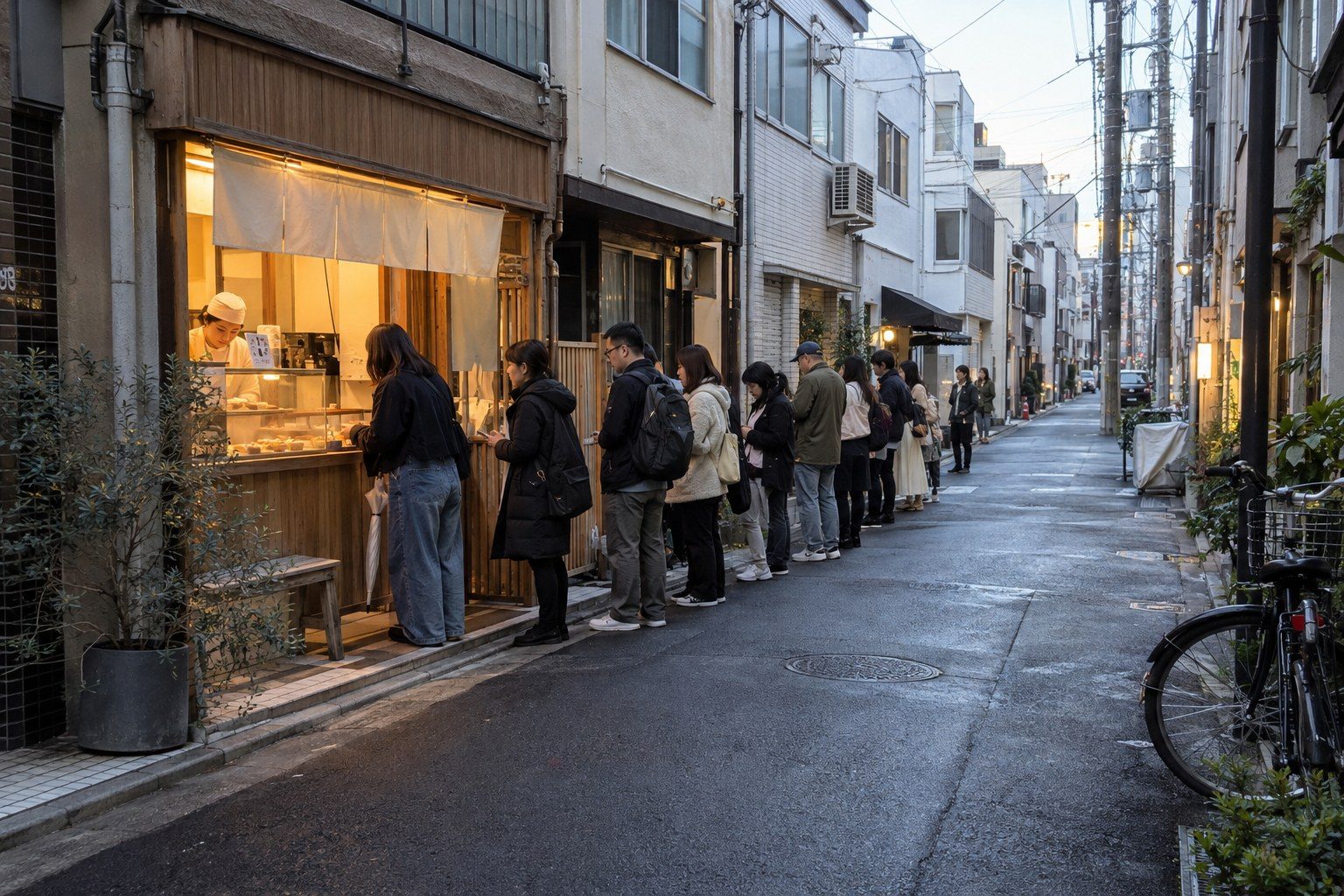
OSAKA — At 6:40 on a Tuesday morning, the line outside a 12-square-metre dessert counter on a back street in Osaka already wraps around two corners and a tea shop. The people in it are not waiting for phones, sneakers or concert tickets. They are waiting for a rice cake with a drink problem.
It is called the mojiǔ, and in the space of one summer it has gone from a late-night kitchen accident to the most photographed dessert in the country.
A happy accident, mostly
The mojiǔ's inventor is Lin Meiqi, 34, a former wedding-cake decorator who moved from Kinmen, the Taiwanese island off the coast of Fujian, to Osaka six years ago and opened her shop, Sticky Situation, in March with a menu of exactly three items. None of them were mojiǔ.
The breakthrough, she says, came at 2 a.m. after a wedding client cancelled an order for 300 cognac truffles. "I had a tray of mochi dough on one side and a crate of very expensive brandy on the other," Lin recalls. "I'm not going to pretend there was a plan. There was a crate."
She wrapped a spoonful of the truffle filling in mochi, ate it, and then, by her own account, ate eleven more "for quality control." Her uncle, Lin Ah-Kok, a retired fishmonger who followed her from Kinmen and is the shop's only investor, tried one the next morning and declared it "the first dessert that understands me."
She put it on the menu that weekend as a handwritten special. By Friday it was the only thing on the menu.
So what is a mojiǔ?
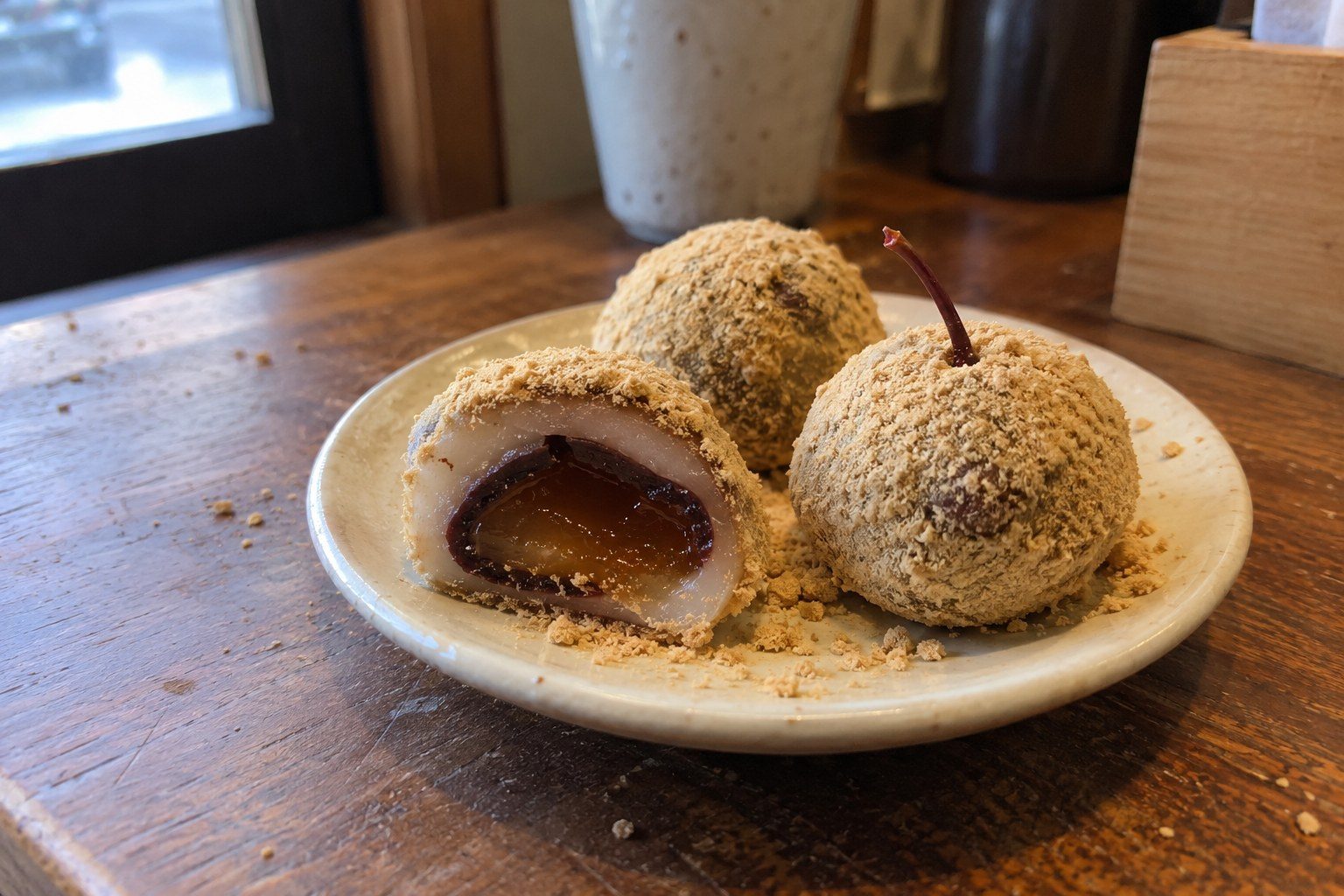
A mojiǔ is a mochi with a secret, and the secret is about 40% alcohol by volume. Each one is roughly the size of a ping-pong ball and is built in three layers:
- The mochi. A thin, pillowy skin of glutinous rice, dusted with toasted soybean flour. It should stretch about a hand's width before it snaps, which customers test on camera.
- The chocolate wall. A paper-thin shell of dark chocolate that keeps the filling from turning the mochi into porridge. Lin calls it "the designated driver."
- The core. Either a wobbly cognac jelly or a single cherry soaked in liquor for three weeks. The cherry version still has its stem, which pokes out the top like a tiny periscope.
The correct way to eat one, according to the laminated card on the counter, is in one bite. The incorrect way, chosen by roughly half of all first-timers, is in two bites, followed by a short gasp and a cherry rolling across the floor.
The shop asks for ID from anyone who looks younger than 18 and, after an incident in July, from anyone who looks "too excited."
From back street to sold out
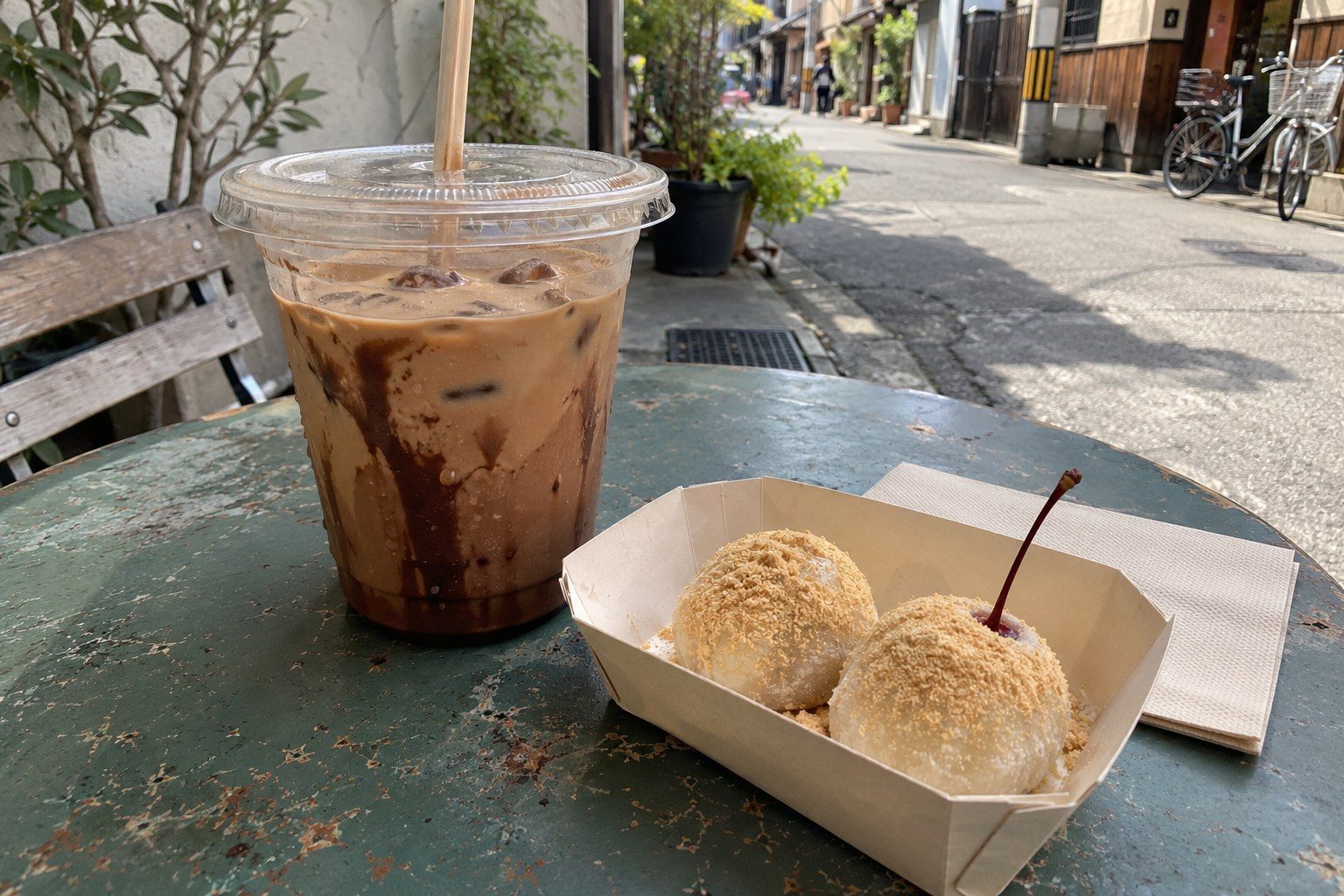
The craze started, as these things do, with one video. In June a university student filmed herself stretching a mojiǔ until the cognac jelly peeked out, then washing it down with an iced mocha from the café next door. Her caption read: "What goes well with mocha? Mojiǔ!"
The clip was shared 4.1 million times in a week. Within a month, #MochaMojiǔ had become a format: buy a mocha, buy a mojiǔ, hold one in each hand, take a bite, take a sip, make a face.
The consequences for Sticky Situation were immediate:
- Queues. Lines now start forming at 5 a.m. A man in a folding chair outside the shop has begun renting out places in the queue for 500 yen an hour, plus a mojiǔ.
- Sell-outs. The daily batch of 1,200 is gone by 9:15 on most days. On a record Saturday in August, it was gone by 7:52.
- Limits. Customers are now capped at six per person, which has led to an increase in people arriving with their grandmothers.
- Collateral success. The café next door, which had been quietly struggling, now sells 900 mochas a day and has renamed its house blend "The Other Half."
The trend has also spread to other cities. Office workers in Tokyo pair mojiǔ with a mocha at 3 p.m. as a "sweet treat with consequences." A wedding in Nagoya replaced its cake with a 2-metre tower of 800 mojiǔ, which guests reportedly found "moving" and "in the end, quite moving."
The name, explained
The name is simple. Mo is from mochi. Jiǔ is 酒 (jiǔ), Mandarin for alcohol. A boozy mochi is a mojiǔ. Her Japanese customers read the same character as sake, which Lin says is "close enough." Lin says the name came to her in about four seconds, "which is still longer than it takes to eat one."
"Mocha, mojiǔ. They sound like they were meant to be together."Lin Meiqi, inventor
It also rhymes, which turned out to matter more than anything else. "Mocha, mojiǔ," Lin says, holding one of each. "They sound like they were meant to be together, so now everyone orders them together. I didn't plan that, but I'm taking the credit."
The name has caused some confusion. Tourists regularly ask for "a mojito, but chewy," and one supermarket chain briefly shelved a copycat version next to the rum.
Not everyone is chewing along
The mojiǔ has its critics. Morita Kenji, a (fictional) food columnist known for reviewing gyoza with the seriousness of a court ruling, called it "a dessert that cannot decide whether it is a snack or a bad decision." He then went back the next day and bought six.
A group of traditional mochi makers in Kyoto, some from families who have pounded rice for 200 years, issued an open letter asking that "rice cakes be allowed to remain sober." A regional association of dentists has asked people to stop testing the stretch with their teeth.
The copycats
Where there is a queue, there are imitators. Spotted so far:
| Brand | The pitch | The problem |
|---|---|---|
| MoJoe | Mochi filled with espresso, "a mocha and a mojiǔ in one" | Defeats the entire point of the joke |
| Mochiu Pro Max | A mojiǔ the size of a grapefruit | Cannot be eaten in one bite, or two, or safely |
| Sober Mojiǔ | Alcohol-free, with grape juice inside | Customers describe it as "a mochi with a grape" |
| Mojiǔuu | Same as the original, more vowels | Trademark lawyers are reportedly "having a lovely time" |
What's next for Lin
Lin is opening a second shop in December, directly opposite the first, "so the queue has somewhere to go." She is also testing a rice-wine version with osmanthus and a winter edition with a warm kaoliang core, a nod to the sorghum liquor Kinmen is famous for, which her uncle has volunteered to test "daily, for as long as it takes."
The next big idea, though, is a matching drink. Lin won't share the details, except to say that its name will rhyme with something already on her menu.
"People keep asking what goes well with a mojiǔ," she says, wiping cocoa powder off the counter. "Give me a few months. I'll have an answer, and it will rhyme."
SATIREEvery person, shop and brand in this story is made up, and so is the craze. Please do not queue for it.